The Scam Economy and the Populist Myth
On May 9, 2025, Gentile was sentenced to seven years in federal prison. Gentile reported to prison in November. Twelve days later, Donald Trump commuted Gentile's sentence to time served.
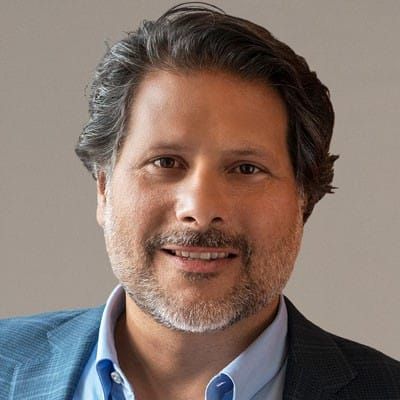
In 2013, David Gentile, a New York accountant, founded an investment company he named GPB. Gentile wanted to play like a big time private equity outfit, but with a twist. He would take investors' money, buy businesses like car dealerships, and then pay investors regular dividends out of the profits of the companies he bought. Typically, a private equity firm locks up investor money until a "liquidity event" like a "dividend recap" or the sale or public offering of purchased companies. Then investors receive a big chunk of cash. Gentile, in an effort to appeal to average individual investors with, say, some retirement money, promised to pay out proceeds on a regular basis, almost like a bond.
Of course, he needed a way to sell the idea to those individual investors who aren't nearly as sophisticated as managers of university endowment funds or pension funds. So he and his associate, Jeffry Schneider, who ran an associated investment marketing company, Ascendant Capital, held roadshows for brokers. The biggest element of their pitch was that the brokers would receive bigger commissions from GPB than they would from selling plain vanilla mutual funds, blue chip stocks, and municipal bonds, the traditional backbone of individual retirement accounts. Plus, they could give their individual clients the same opportunity to put money into the high-flying, high-paying world of private equity, where the Cerberuses, and KKRs demand high minimums, like a million dollars. In other words, average Joes and Janes, could invest like the ultra-wealthy.
Enough brokers saw those high commissions as tempting, and, lured by the dollar-sign bait, pushed their clients into buying into GPB. Over 10,000 people around the United States invested about $1.6 billion dollars, often in increments of tens of thousands but sometimes in hundreds of thousands.
They invested into a fraud.
In August of 2024, a federal jury convicted Gentile and Schneider of securities fraud, securities fraud conspiracy, and wire fraud conspiracy. Gentile was also convicted of wire fraud. A third criminal, Jeffrey Lash, pled guilty to wire fraud before trial. GPB is now in the hands of a court-appointed receiver who is trying to turn the assets into money so it can be returned to investors. Some of those investors will die before they ever see most of the money they entrusted to Gentile, Schneider and Lash.
At his sentencing hearing, Gentile's lawyers appealed for mercy. Gentile, they argued, was practically a saint, a hardworking boy from Queens, New York, who pursued the American Dream, was generous with friends, loved his family, only wanted to share American prosperity with average fellow citizens. They portrayed him as simultaneously a financial genius for developing the GPB model, and as naively incompetent for letting GPB's growth overwhelm finance controls.
Gentile paid himself millions of dollars.
On May 9, 2025, Gentile was sentenced to seven years in federal prison. (Schneider got six years.) Gentile reported to prison in November.
Twelve days later, Donald Trump commuted Gentile's sentence to time served. Gentile served twelve days. He did not have to disgorge his millions. He did not have to make restitution. He did not have to admit his guilt or say he was sorry. And this week, his lawyers demanded that the court overseeing the case pay his lawyers' fees and court costs, including for one "expert" advisor who charged $1,800 per hour.
As far as I can tell, nobody who's talking can explain exactly why Trump ordered Gentile's release, what money may have changed hands, what promises were exchanged, though Trump's pardons of felons have created a cottage industry of greased palms.
The stories of Trump's corruption will be told for many years to come. I want to tell a couple of other stories illustrated by this episode.
First, Trump has been held up by many of my colleagues in the press, especially the pundit class, as some sort of populist paladin. This is phony. Trump says he's a populist. But he is the opposite. Everything from his tax breaks for the wealthy to his decimation of the government proves Donald Trump is the best thing to happen to the wealthy since Ronald Reagan wrecked unions and deregulated the finance industry.
The Trump administration has dismantled the agency in the federal government whose sole aim was to protect Americans from financial fraud and abuse, the Consumer Financial Protection Bureau, or CFPB. Having spent time reporting on payday and car title lending, and with people victimized by those businesses, some of which have charged the poor and working class 3,000 percent interest, I know the need for CFPB.
Second, Trump aside, the Gentile/GPB episode proves what has now become obvious. We really do have justice by income in our country. My pal Lloyd, a former drug addict who considered it a luxury to buy new sneakers, spent two years in state prison for selling a little heroin. Unlike Gentile, Lloyd never whined about his sentence. He admitted he sold dope. And while he didn't like spending two years a Chillicothe, Ohio pen, he also thought the stretch did him some good.
Crooks like Gentile, despite arguably doing more harm than Lloyd ever did, skate because they know people Lloyd does not know, and they have money Lloyd would never see if he lived three lifetimes. Yet we want Lloyd to behave better than we expect of Gentile. We will hold Lloyd, and all the Lloyds, to higher standards than we hold wealthy criminals. And people wonder why we have a crisis of morals and ethics in America.
Third, the GPB saga underscores how badly we have messed up American retirement. When the United States dismantled defined pension plans in favor of 401ks and IRAs, thus forcing people to wade into the financial markets in an effort to secure a comfortable retirement after their years of work, we opened the door to all the Gentiles. And we invited brokers, who never should have advised clients to invest in GPB – it was always far to risky for individual investors even if Gentile had been honest – to put our money into sketchy investments. The brokers who did so are just as guilty as Gentile.
Finally, by forcing all of us to play the Big Finance game, we have become beholden to markets and corporations. We live and die by the S&P 500. We live with the Ohio teachers' pension fund, STRS (State Teachers Retirement System), itself being plagued by investment scandal, or California teachers investing in private equity funds that destroy businesses and, consequently, decimate school budgets. And we become much less likely to favor needed regulation of business or of capitalism itself because regulation can be costly to business and we don't want to risk corporate profits and our own dividends and stock appreciations. We are captured and trapped while our money flows upward into the pockets of the ultra-wealthy.
But recognition of this condition seems to be growing. Revolts are happening on multiple fronts – the current anti-data center movement is just one. Real populist movements, not the phony Trump kind, are percolating. Like so many other revolts in the past, they begin with saying "no," and then figuring out a new path forward. Such moments can be dangerous, but necessary.
Comments ()