The Power of "No"
But in the words of B.B. King, the thrill is gone. From my long-view perspective on the changes I've witnessed, we are now in an existential battle for everything we say we value.
There are advantages to age, especially in an era in which change comes screaming at you at the speed of sound. Age can also come with hubris, so maybe it's that, but I think having lived awhile, straddling eras, can help people see with the clarity of reference.
I straddle not just decades, but centuries. I was born to older parents after mom and dad took an autumn trip to a Canadian cabin and the fresh air and great outdoors apparently put a gleam in my father's eye. I came along nine months later, an accidental "blessing" as my Catholic mother liked to say through gritted teeth. So I had parents who were World War II vets, children of the Great Depression, and whose own parents were born in the 19th Century. I knew my grandparents and they told me stories of immigration and hardship and the Spanish flu. And my maternal grandparents lived in stuck-in-time Jeannette, Pennsylvania. They shopped at the corner grocery owned by Mel Miller. The store had wooden floors and Mel used a long grappling arm to retrieve cans from high shelves. He was the only employee. I grew up in taverns, sipping beer from a juice glass and eating pickled eggs as my grandfather talked about the 1920s with his friend, the tavern owner. Grandpa's telephone was heavy and black. It dated from about 1925 and still worked fine. About the time Neil Armstrong stepped onto the moon, I asked my paternal grandmother what she thought was the most amazing invention to come during her life and she – who had serious doubts men were actually on the moon – said "the machine." She meant the automobile, which she called "machines" until she died. "Watch out for the machines" she'd caution. "When I saw that first machine, I knew anything was possible," she said.
I saw my first personal computer as a senior in high school when my school bought one. It was so special only the smartest math and science kids were allowed to touch it. Made by Hewlett-Packard, it looked like an oversized Texas Instruments calculator. You could punch equations into the machine via the numerical keys, and your entries would show up in green LED dots on a strip of a "screen." You could spell "BOOBS" with numbers that way, which my smart friends did because we were high school boys. Once you hit "enter" or the equal sign, paper tape would roll out showing all the steps.
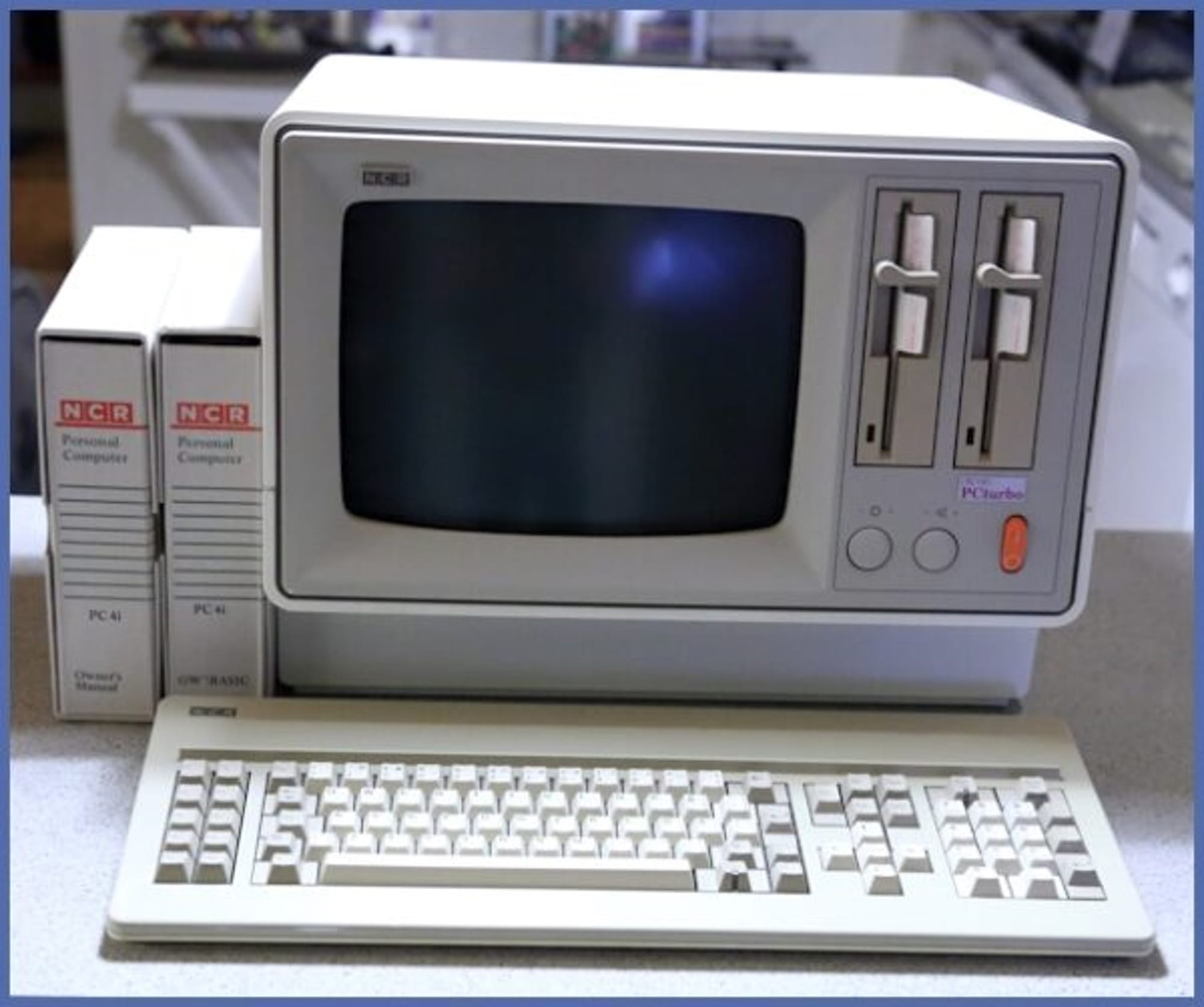
I typed my first professional work on a portable electric typewriter. My own first PC was an NCR PC 4, with five-and-a-quarter-inch dual disc drives, and I'm telling you, I was amazed, thrilled, even, like my grandmother seeing her first machine.
But in the words of B.B. King, the thrill is gone. From my long-view perspective on the changes I've witnessed, we are now in an existential battle for everything we say we value.
I spent a fair amount of time in and around Silicon Valley when I wrote – mostly about biotech – for Wired. I got to know Silicon Valley subcultures. The more I saw, the more alarmed I became for all the reasons now obvious to everyone thanks to Musk, Thiel, Andreessen, Zuckerberg, Bezos, Karp and many, many underlings and wannabes and their Ayn Rand and Robert Heinlein wet dreams who are now polluting our lives and our society.
German philosopher Jurgen Habermas warned us about what would happen when technology turned human and humane interaction, what philosophers like Habermas called the "Lifeworld," into a servant of "the system." The system would colonize and reshape – or "reify" – humans, human government, human culture, human interaction into products to serve the system. It would colonize them, turning technology and the people who controlled it from useful to domineering. The result would be alienation, the loss of community, nihilism, the usurpation of humane government by privatized profiteers. We're there now.
(There's a good story in a New Yorker issue of a few months ago that discusses Habermas' life – he died this year – and some of his thinking. I recommend it.)
If you are a believer in democracy, in freedom of thought, in the American values those of us born at a certain time and now of a certain age were brought up to believe in, the Silicon Valley oligarchs, the AI chieftains, are your enemies. They wish to subsume all we value under the heel of what they want us to believe is the inevitable, and they want us to have no part in using democracy and government to regulate them. They want to reserve that privilege for themselves. They want to set themselves up as philosopher kings to tell us what's best for us, which is really what's best for them.
They need us to go supine because they've bet the farm. The infrastructure build-out for AI and related facilities now exceeds the most expensive infrastructure projects in American history at more than 3% of the nation's total GDP, over $10 trillion in the next six years. Most of that is borrowed money, making the whole enterprise the ultimate "too big to fail" house of cards.
But people around the world are beginning to say "no." From data center opponents in small town Ohio to European governments trying to put reins on the tech giants, people have awakened to the danger. Populist revolts can be dangerous, but sometimes necessary. We are witnessing one right now as people say "no" to Meta glasses, and data centers, OpenAI and ChatGPT, and crypto currency, and instead begin to appreciate once again going into a store run by somebody you know, of looking people in the eye when you talk to them, of valuing a politician who values you, not the billionaire donor.
The oligarchs are scared as hell this revolt might spread, so they're spending a lot of time and money trying to stifle it – $30 million just to defeat Sherrod Brown in Ohio, for example. I'm guessing they'll fail because once people rediscover the power of "no," they're a lot less reluctant to use it.
Here are some good local stories published this week by outlets around the country. If you can support this good local journalism, please do.
Nonprofit takes up work to overturn wrongful convictions after closure of Idaho Innocence Project
OpenAI, Anthropic and other artificial intelligence companies hire Tennessee lobbyists
2 years into K-12 voucher program, SC leaders don’t know how students are performing
In rural Ohio, it’s getting harder to find lawyers for people who can’t afford one
Federal judge orders ICE to halt ‘likely illegal’ policies in Baldwin County
Comments ()