The Ideology of Education
About four months ago, I wrote about the charter schools of Chester, Pennsylvania, where most of my forthcoming book, The Mayor, takes place. I'm doing it again now because big news broke this week.
About four months ago, I wrote about the charter schools of Chester, Pennsylvania, where most of my forthcoming book, The Mayor, takes place. I'm doing it again now because big news broke this week.
I've been writing about smaller places – Lancaster, Ohio in Glass House; Bryan, Ohio in The Hospital, and now Chester – for several reasons. First, a smaller place is manageable for a lone writer like me. Second, I've long believed America, and the American Big Media, has ignored such places to the detriment of not only the places, but the country writ large. Third, the very same forces that affect Boston, Kansas City, Sacramento, Pensacola, New York also affect Chester, Lancaster and Bryan. But in the smaller places you can get a good look at what those forces are, how they act, and how they affect people.
This week's news about school vouchers is a perfect example of what I mean.
Yesterday, the Trump administration issued the rules for its long-awaited, and advertised, federal school voucher program. Under the program, taxpayers can donate $1,700 to a "scholarship granting organization," which, in turn, will supply cash to families who want to send their kids to charter, private, or online schools. A couple can donate $3,400.
If that's all you knew about this program, you might say "That seems like a fine idea." Well, let's ask who has the $1,700 (you can donate less). Few people in Chester have $1,700 to donate. So the vouchers will go primarily to the already comfortable. A family can make up to three times a region's median income and still qualify for the tax deduction, so people making hundreds of thousands per year will be tempted to donate.
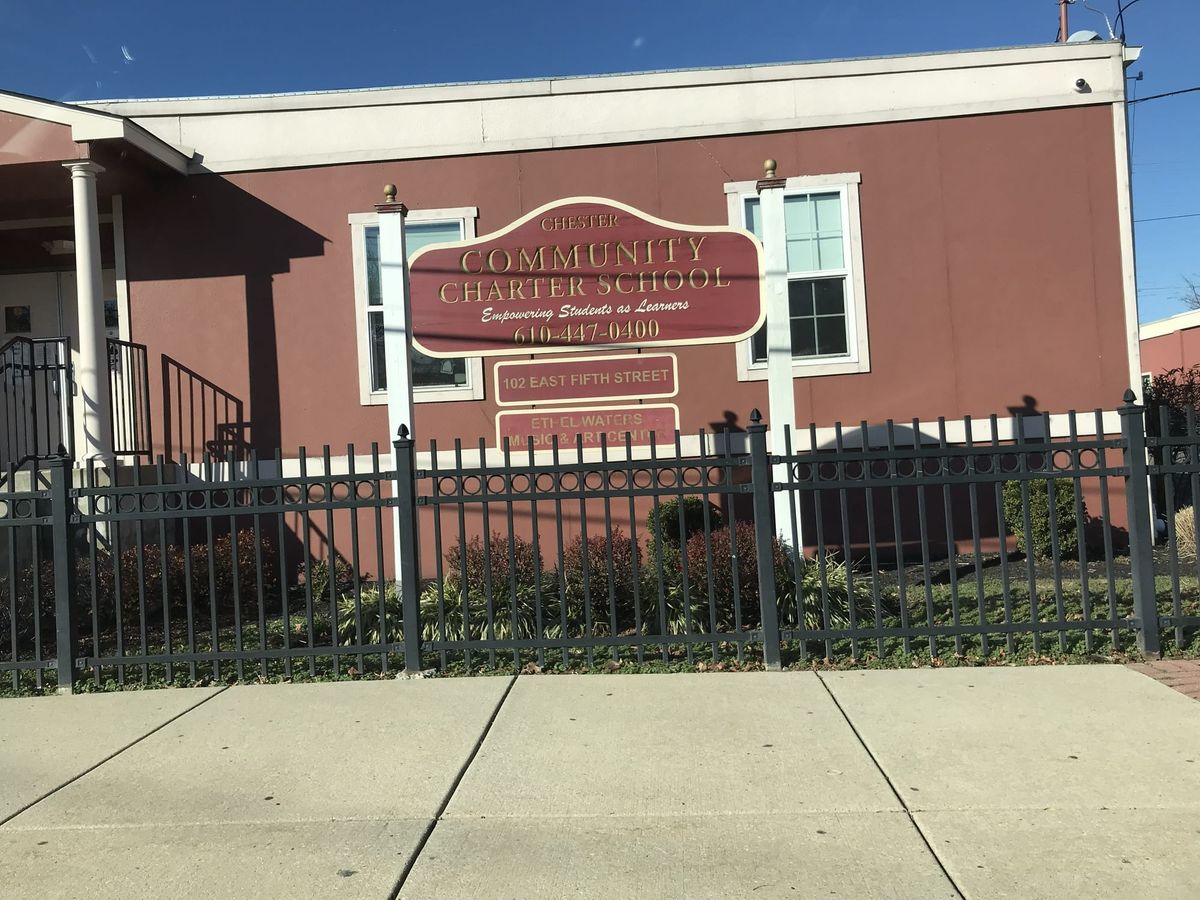
The photo above is the of the exterior of the Chester Community Charter School. The school, and its buildings look nice. Kids wear uniforms. The school gives them a laptop.
Meanwhile, parts of Chester look like this:
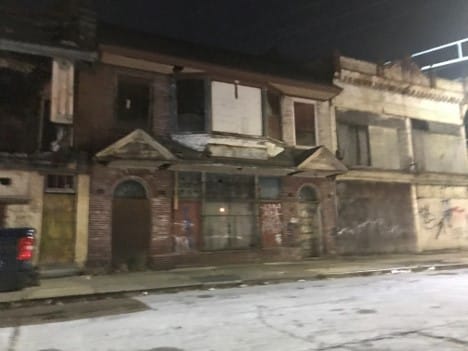
It's no wonder many Chester parents choose to send their kids to the charters. In fact, there are more K-8 students in the charters than the Chester Unified School District. In the case of Chester, the taxpayers foot the bill. Chester Unified has to pay the Chester Community Charter around $13,000 per year per student if that student does not have special education needs. If the student does have such needs, the figure can balloon to tens of thousands. Interesting, then, that Chester Community Charter classifies lots of kids as needing special education. Chester Unified is in receivership. It has been in receivership for a long time.
Chester also has had a scholarship granting organization. The local man in charge of this charity has collected donations, mainly from businesses, taken a cut, and passed the money along.
The man who created Chester Community Charter, Vahan Gureghian, lives in a faux French chateau in one of the wealthiest communities in Pennsylvania, and in a Palm Beach mansion. The fees the charter pays to his company for "management" financed those houses.
Another man, Jeff Yass, lives nearby. Yass is one of the richest men in the world and a devotee of Ayn Rand and economist Milton Friedman. Yass has spent millions in donations to political campaigns – including the Chester mayoral race – and lobbying in an effort to make federal vouchers, and state-level vouchers, come true. (Gureghian is a big donor, too, also to the Chester mayoral race among many others, but pales in comparison to Yass.) (You can read more about Yass in my April post.)
Unlike Gureghian, Yass is not motivated by profit. He's an ideologue who despises government and especially "government schools." He wants Americans to embrace a radical, anti-community philosophy of libertarian freedom. And so the new federal vouchers will likely be used to fund religious schools, raising First Amendment issues. As Linda Greenhouse noted in the New York Times this week, "The anodyne sound of that observation — that of course the state wasn’t preventing the direct use of public money for religious education — shouldn’t obscure the full dimension of the change the court has wrought in the constitutional law on religion. The notion that the First Amendment’s other religion clause, the prohibition against the 'establishment' of religion, might have anything to say about this arrangement sounds now like the vestige of a distant past, so thorough has been the establishment clause’s erasure from constitutional notice."
It'll be interesting to see what happens when public money is used to support an Islamic madrassa. I was educated in Catholic schools because my mother wanted me to go to heaven. But my parents never dreamed of asking the state to pay for my tuition.
To me, though, the even bigger issue is community, both local and national. Here's what Thomas Jefferson thought:
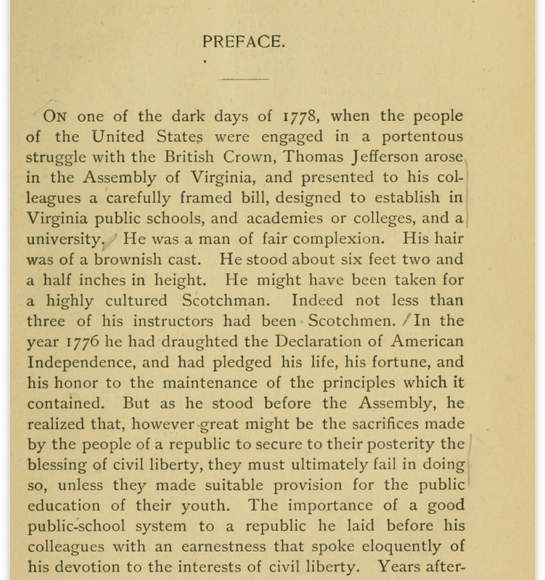
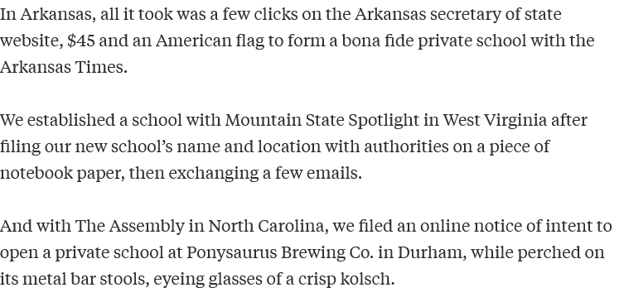
Public education was not a free-market product. It was vital to the national well-being. Over time, Jefferson's vision became a reality and in the years after World War II, American public education was widely regarded as the best in the world. Now it's a profit center and, as ProPublica reported today, it often doesn't take much to set up your business.
In The Mayor, I spend some time discussing Milton Friedman, Yass, Gureghian and what the voucher and charter movement means, but the short answer is that it is a way to inculcate worship of laissez-faire, winner-take-all economics, and/or the religious views of whoever it is who started the school. Meanwhile, local public schools, the glue in many smaller communities, are going to suffer. They already are.
Here are some good local news stories from the week:
Rhode Island study links sustained arts education — especially music — to lower chronic absenteeism
News organizations publish Florida’s secret examination of insurer profits
Iowa Farmers Union, solar group sues USDA over changes to renewable energy funding program
For surfers, a nor’easter in Maine means perfect weather
Sorry. That last one was mainly for me. Say, did you know The Mayor is available for pre-order? You can see new reviews of it here. Kirkus gave it a star, which, in Publishing World, is a thing. I do hope you will consider it. And maybe spread the word. Thanks.
Comments ()