Safety
We live in a security nation now. We are supposed to be afraid of everything, all the time, and so give up much of what makes life worth living for the blessing of "safety."
This week's essay was not sparked by the 9/11 anniversary, though the milestone of twenty-five years – a generation – after the terrorist attacks is a fitting, if inadvertent, moment. Rather, this essay was sparked by the revelation that Anthropic, the artificial intelligence company that says it may or may not be making stuff that will kill everybody on Earth, is surveilling us.
Reporter Daniel Boguslaw's article in The American Prospect this week revealed "that the frontier AI lab is building out an extensive monitoring system to keep tabs on activists who oppose the rapid development of artificial intelligence.
"In addition to monitoring activists in the vicinity of Anthropic executives and keeping tabs on protests near physical Anthropic assets, the firm is also implementing a 'pre-crime' approach, attempting to predict incidents before they happen. In some cases, that also means reporting suspects to police before a crime occurs."
In other words, a private company is spying on American citizens who wish to exercise their First Amendment rights.
(Disclosure: Anthropic stole four of my books. It has admitted to this theft. I am part of a massive court settlement in which Anthropic will pay authors whose books it stole a few dollars in exchange for leaving it alone to make billions upon billions from its corporate thievery.)
Corporations have spied on Americans before. It's often done in the name of security. eBay, for example just settled a case brought by David and Ina Steiner for $48 million. For years, eBay stalked, harassed, and intimidated the Steiners because they had the nerve to write things eBay didn't like. Tobacco companies, military contractors, polluters have done the same.
Now, though, spying, surveilling, tracking, has become as American as apple pie. We ought to think harder about what that means.
I spent much of 2023, 2024, and a bit of 2025 in Chester, Pennsylvania reporting my upcoming book, The Mayor. (Pre-order it from your local indie bookstore!) Chester has had a serious gun violence problem. In 2016, it was the murder capital of America. While I was living in the city, I attended meetings between the mayor and the police commissioner about various crimes, including shootings. Several times, suspects, who later turned out to be guilty, were spotted by pole-mounted cameras which helped police arrest the bad guys. This is why police agencies love license plate readers, or LPRs. They do work.
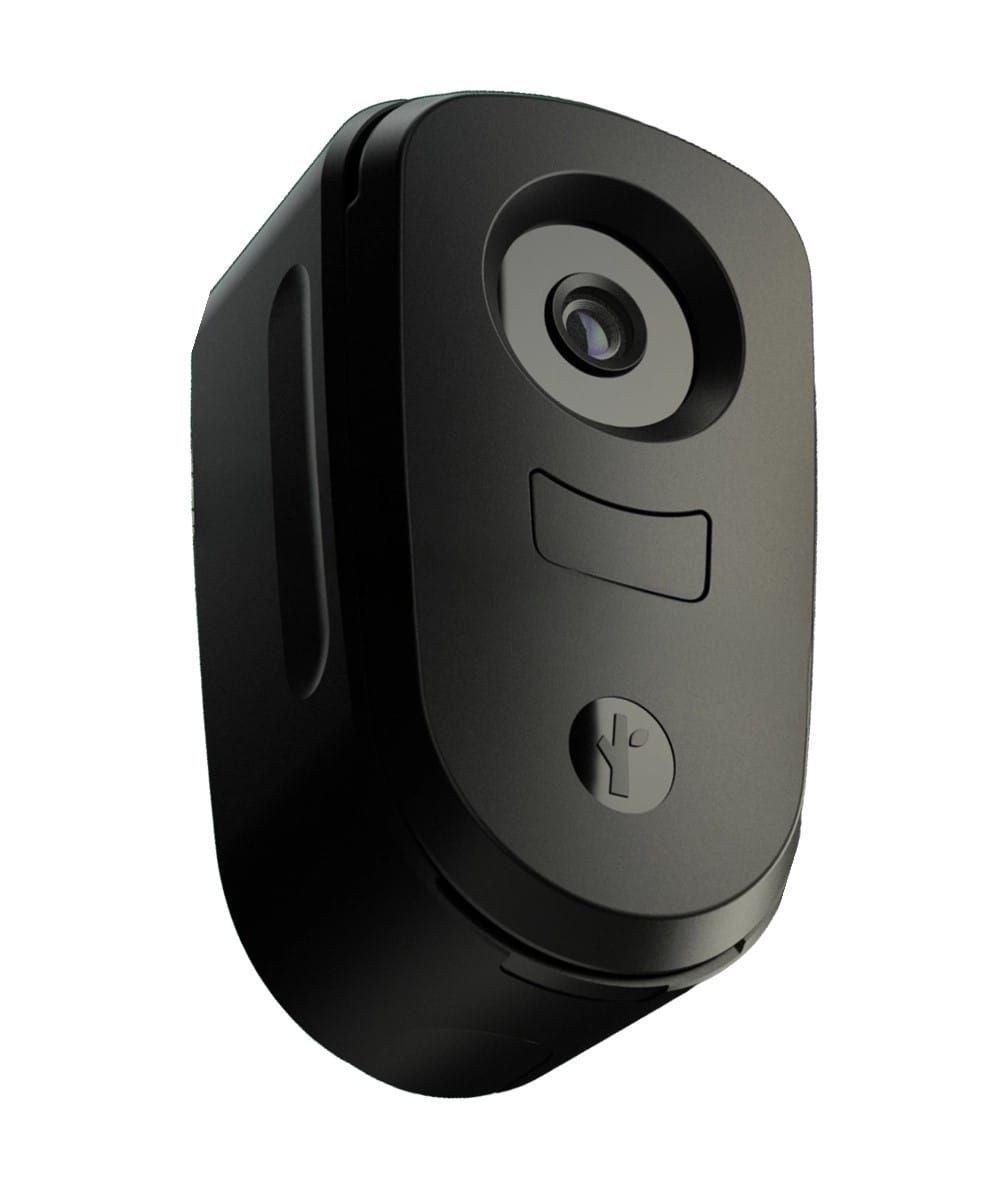
Right now, though, in addition to the popular uprising against data centers, there's a related uprising against Flock cameras and LPRs in general. Flock makes LPR cameras that can track cars, log data, create patterns and time of travel, recognize human beings, and run all that through AI to make a pretty intimate picture not only of a suspect, but of everybody.
The Institute of Justice, a non-profit, non-partisan law firm, has documented more than 200 cases of police officers and other officials abusing the LPRs. A Texas deputy tracked a woman after her abusive partner accused her of having an abortion. (Spousal and lover tracking is a favorite pastime of LPR abusers.) A Florida deputy stalked a woman he saw on TV.
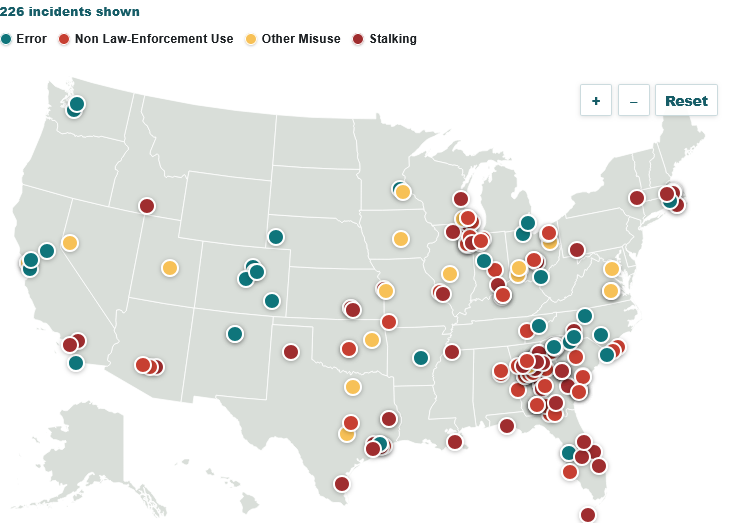
And what of surveilling that is not, officially, abuse? Is it OK for police or any other official to track your comings and goings based on suspicion? Suspicion of what? Based on what? Lacking good answers for those questions, and in light of the abuses, jurisdictions across the country are either refusing to install the cameras, or are removing ones they've already mounted.
But we need the LPRs and AI, proponents say, for "security" and "safety." Opponents argue the price is too high.
In 1974, journalist Seymour Hersch revealed in The New York Times that the CIA, in violation of its legal charter, was spying on Americans, namely people who opposed the war in Vietnam. It had been spying on Americans for long time. In response to this revelation, and to the Watergate scandal that ended Richard Nixon's presidency in a cloud of disgrace, a Senate committee under the leadership of Senator Frank Church held investigatory hearings. The information released during those hearings led to new laws to put guardrails around federal government security agencies. The agencies hated that, but, by most accounts, they mostly complied.
Then, twenty-five years ago, the planes slammed into the World Trade Center, and the Pentagon, and into a Pennsylvania field. Congress, with few dissenting voices, passed the Patriot Act, and all sorts of guardrails were lifted. Journalist Radley Balko, in a New York Times essay this week, detailed the long term effects on American liberties.
We live in a security nation now, in the shadow of 9/11. ICE, wiretapping of American citizens, detention based on suspicion, concentration camps, the designation of legitimate protest as terrorism, the rise of the warrior cop (the name of a book by Balko) and the appearance of armored personnel carriers on small town police forces, an entire "security" industry made of contractors like Palantir, headed by a man, Alex Karp, who supports Trump, all arose out of 9/11. Karp believes that ideals of a pluralistic society are "shallow" and "vacant" and "glosses over the fact that certain cultures and indeed subcultures . . . have produced wonders. Others have proven middling, and worse, regressive and harmful." The harmful and regressive ones, presumably, will be judged so by the likes of Karp. The U.S. government is now paying Palantir, whose leaders express an overtly fascist philosophy, and work with ICE, billions of dollars in the name of security.
"He kept us safe." "He'll keep us safe." "She will keep us safe." "If elected, I will keep you safe." This has become the mantra of American politics and American culture. And so we have given in to "security." We endure the TSA lines, the gaggle of cameras even in the most innocuous of places, school "resource officers," the intrusive questioning, the layers and layers of security checks to go online and to use a website because the digital pioneers who promised us peace and freedom and democracy and human connection are long gone and the new tech oligarchs sell us programs to make us safe from the technology they themselves created. My streaming TV channels are wall-to-wall ads for anti-AI crime security software that will keep us, our businesses, our families, "safe."
When I was a kid, my mother, who ran campaigns for our local congressman, took me to Washington to see the sites. We walked into the Capitol. We walked into the congressman's office. We walked through the gate to the White House for a tour. Getting into the physical institutions of our democracy is now an ordeal of security as more and more of our government is shielded from us by walls and arms and surveillance. And the more distance we feel, the more we come to distrust it.
We live in a security nation now. We are supposed to be afraid of everything, all the time, and so give up much of what makes life worth living for the blessing of "safety."
The bad news is that nobody can "keep you safe." My own mother and father, who loved me, could not "keep me safe" from fireworks, stingray bike banana seats, poisonous caterpillars, fish hooks, my junior high crush, my first car accident, career disappointment, and whatever it is that will eventually kill me. They tried, as all parents should try. They educated me, taught me that doing stupid stuff could lead to painful results (advice I often ignored and then regretted ignoring), and kept an eye out for obvious trouble. But they knew they could not "keep me safe" and they wanted me to be a kid and do kid stuff, and learn some hard lessons on my own. (A stingray bike with a banana seat is not an appropriate vehicle for racing down the sides of a rock quarry, in case you were curious.)
A politician or a company promising to keep you safe is lying to you. And, meanwhile, what have you traded for your safety?
We live in a darker, uglier country than we did on 9/11. We suffer more mental illness, more drug addiction and death, more despair, more turmoil. Thousands of Americans have died in wars. The misbegotten war in Iraq, sold to Americans as necessary for our safety, killed and wounded tens of thousands of Americans and hundreds of thousands of Iraqis. We now convict mothers for letting their five-year-olds walk unsupervised (but with instructions to go and come right back) – through a gated community, mind you – to a pond to collect feathers. My parents would have been arrested hundreds of times. Is it any wonder our kids are freaked out?
There are bad people in the world. And bad stuff happens. So of course, prudent caution, prudent preparation, security readiness, mandatory vaccines, safety regulations for the environment, food, drugs, devices are all necessary things in any society. I am for regulation of business to protect Americans from the unscrupulous. But we've changed our whole society in the name of "safety." The Patriot Act did not keep us safe. All the Flock LPRs in the world will not keep you safe. Arresting a mother who let her kid walk in the neighborhood will not keep you safe. If you want to live any sort of life worth living, you can never expect complete safety.
To insist on such a thing is to give license to any actor, like Anthropic or the government, to invade your life in the name of security or safety. Of course, there is risk in easing up and reining in the security-industrial complex. I wish we'd have a grown-up discussion about how to find the right balance. I wish a politician would say, "You know, if we remove all the Flock LPRs, it's possible a killer will get away. Can we live with that?" Or, "If we allow Americans easier access to their own institutions somebody might abuse that allowance to make havoc. Can we live with that?"
To not have these discussions is to cede more and more of our liberty to both government and private corporations. I believe democracy and liberty are risky, that risk is inherent in a free and open society. It is long past time for politicians to say that out loud again, to be honest with the American people that nobody can give us complete safety, and that you wouldn't like living in any country that tried. We are already well on our way there and we are living with the sad results.
Comments ()