Private Government
People accuse me of ranting about private equity.
Guilty. I've become a dreaded dinner guest because, at some point, maybe after a couple of glasses of wine, I am easily baited into animated monologues about leveraged buyouts, carried interest, and "special dividends." Other guests back away slowly. I admit to this pathology. I'm working on it.
But I have another example I can't resist highlighting. Private equity is buying private judges.
I'm going to unpack that in a minute for those who do not know there are such things in our country as private judges and a parallel justice system, but PE's interest isn't surprising. PE has its grasping fingers in everything, from day care centers, to ophthalmology practices, to talent agencies, including my own representation! which I find hilarious because the alternative, setting my hair on fire, isn't so appealing.
Most recently, for example, Levine Leichtman Capital Partners, a California private equity outfit, bought control of Signature Resolution, based in Los Angeles, but with offices elsewhere, too. Signature is what's known as an ADR firm, or "alternative dispute resolution." The takeover was not the first or only deal for such a firm. Other ADR outfits have been taken over, too.
You may be familiar with ADR if you've ever been divorced and used a mediator to work out the settlement. Mediation is one form of ADR. Arbitration is another. In arbitration, a "neutral," often a retired judge making some sweet post-retirement income ($7,000-$9,000 per day), and who may work for the ADR company as a non-employee contractor (with the firm taking a percentage), arbitrates a dispute and makes a decision, either as part of a panel or alone. Some may conduct actual hearings, and trials.
Mediating a dispute between two divorcing people, or between siblings fighting over an inheritance is one thing; mediation can often be faster, cheaper, and less adversarial than going to court. But if you've looked at almost any piece of paper that amounts to a contract with a cable company, a credit card company, a real estate firm, a software company – you name it – that the company has forced you to sign in order to do business, you will often see a clause requiring you to use arbitration to settle a dispute rather than taking the company to court. You are signing away your access to the U.S. justice system. The New York Times ran a terrific multi-part series on this back in 2015.
Turning disputes over to private judges matters for everybody even if we aren't involved in a case. Suppose, for example, that a person, or another business, wants to sue, say, a "nutraceutical" company, like, say, Santa Cruz Nutritionals, another company controlled by Levine Leichtman Capital Partners. Such potential conflicts of interest are rife. ADR firms have a big incentive to be nice to the corporations that pay for their services. Too many adverse rulings by a "neutral" can cause business to seek friendlier neutrals. ADR firms routinely court business. Though ethical neutrals are supposed to recuse themselves in such cases, the ethics are largely self-enforced.
Or suppose one business starts a fight with another business over a labor practice (wage theft, for example), or a financing deal. And suppose those two businesses agree to take their case to a private judge. Well, this sort of thing might be of great public interest. Regular court records and transcripts are usually available so the press can cover such matters unless a judge has sealed a record for some valid reason. But in private judging those records can be difficult or impossible to search even if they are supposed to become available. Proceedings are often held on private property, not public courtrooms. Companies use private judges to keep their dirty laundry out of the public eye.
They also turn to private judging if they think a private judge will be cheaper and faster. The court system – everything from family law to intellectual property disputes – is horribly backed up due to years of underfunding.
And that's where private equity's interest in the business comes in. ADRs are growing and making more and more money. Though some form of non-court dispute resolution has been around for hundreds of years, ADRs really took off as America began cutting taxes and defunding public goods in the late 1970s and early 1980s. Government abdicated its responsibilities. A parallel justice system catering to the rich and powerful took off. And now private equity is stepping into the gap we have left to harvest dollars and take control of this booming parallel justice system. PE wants to do to it what it has done to so many other goods in America.
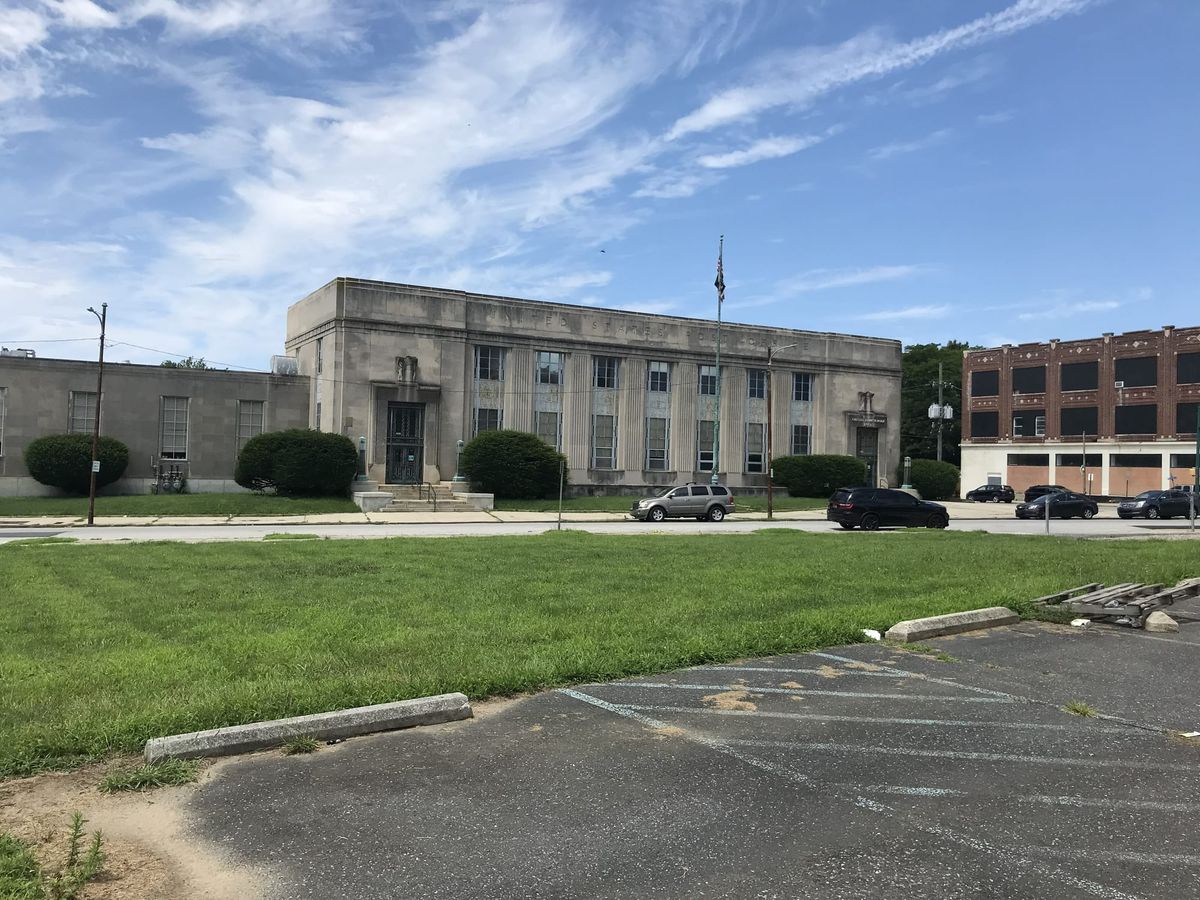
This is our fault. See the building at the top of this post? That's the post office in Chester, Pennsylvania as seen from the parking lot of city hall. It was built during the New Deal and, for my money, is still the most beautiful building in Chester. It needs renovation, though. We've been starving the United States Postal Service to the point where it says it will run out of money by next year. It could stop delivering mail.
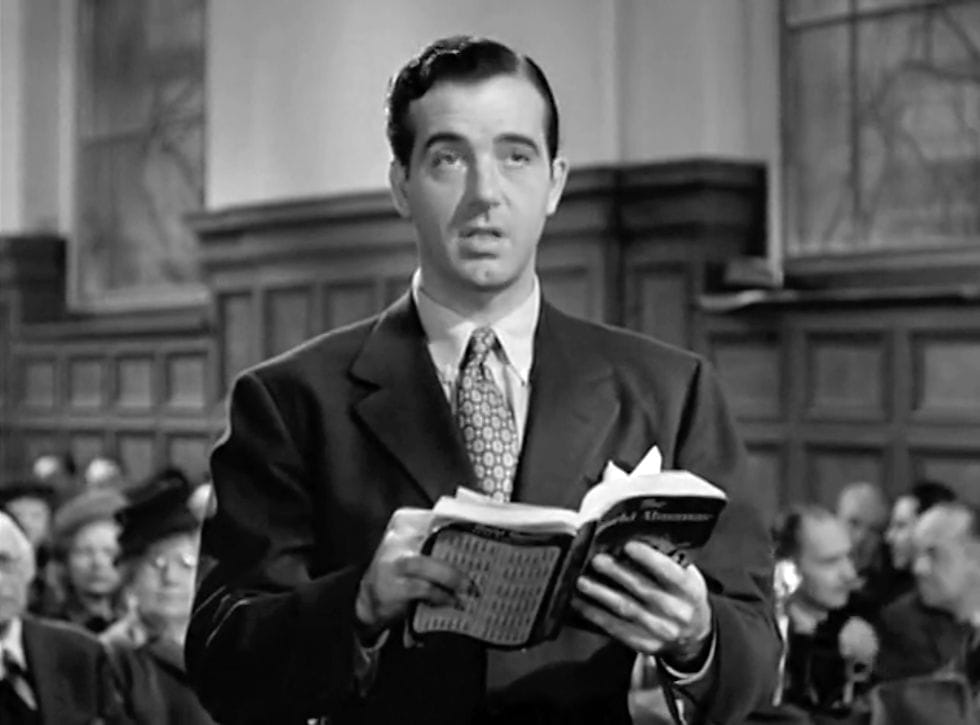
In Miracle on 34th Street, John Payne, playing Santa's lawyer, convinces the court judge that the Post Office Department is professional, efficient, expert. Americans could count on it. But the department was reorganized in 1970 into the U.S. Postal Service by the Postal Reorganization Act. Among the mandates was that the postal service had to self-finance. It was never meant to fully pay for itself. It was a public good, a service of the government. But we abdicated this responsibility and now we are more dependent than ever on for-profit corporations – UPS, FedEx, DHL, Amazon – for what we used to call mail. We have become customers, not citizens.
Water systems, both wastewater and drinking water, are being privatized. Schools are being privatized via charters and vouchers. Roads are being privatized. Chicago's parking meters are privatized. I wrote about this trend a few years ago for The Atlantic, and you will see me write about them again here, and in my forthcoming book, The Mayor (available for pre-order!) which is set mostly in Chester. And now, private equity is jumping in, and all because Americans were convinced we shouldn't have to pay the price for services and goods through our taxes. Somehow, the "free market" would provide. In fact, the PE "special dividends," the corporate profits, are taxes, it's just that those dollars do not flow into better mail service and spruced up post offices, they flow into the pockets of the already wealthy. It's an extraction scheme and we've fallen for it for fifty years.
(Note to new subscribers: Hi! Happy to have you here. Some of you are free subscribers, some paid. All are welcome. Paid subscribers can comment and yell at me, and, as time goes on, I will be putting more posts behind a paywall to help support my reporting. Either way, I hope you all stick around as I learn how to use this new internet newsletter thingy. Oh! Also, I will plug the new book when related to the post, so be warned. Here's a special pre-order offer from Barnes and Noble. I forgot to put it here when I first published this post because I really am pretty bad at self-promotion.

Anyway, I worked hard on it for three years or so, I'm proud of it, and while self-promotion kinda makes my skin crawl, I do want people to read it. The more who do, the better chance I have of being able to keep writing books.)
Comments ()