Pretty Vacant
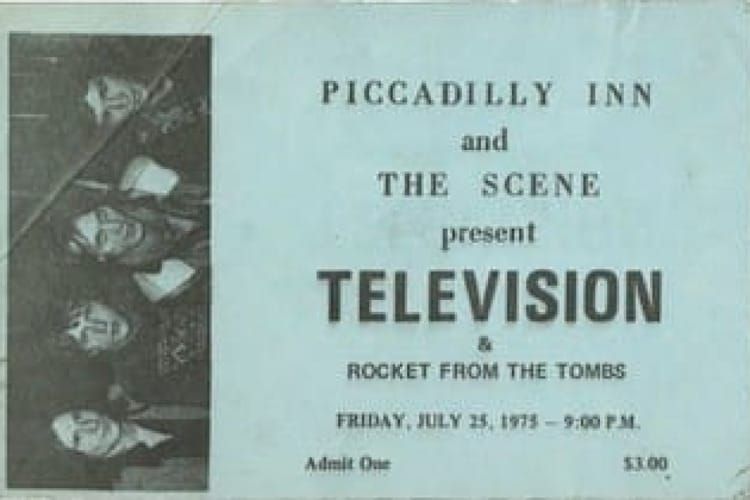
The Ramones released their debut album fifty years ago this month. The Sex Pistols first performed "Anarchy in the UK" fifty years ago this coming July. But before those momentous events in rock-and-roll history, Rocket from the Tombs was rocking Cleveland.
Also fifty years ago this month, Steve Jobs and Steve Wozniak were out in California incorporating Apple Computer. And now we know that America decided to listen to Apple, and the other up-and-coming tech oligarchs, and not to the punks in Cleveland, New York or the UK, and we are paying the price.
There is an argument to made that what became known as punk rock was a creation of Cleveland, Ohio. This statement will be hotly disputed by those arguing for the Velvet Underground as proto-punk, and I suppose you could make an argument that The Stooges, MC5, or even Franz Liszt were punk, and all such arguments have some validity as far as I'm concerned. They make for good beer conversation. But wherever you stand in the debates, there's no doubt that a ferment around 1975 exploded in 1976, and I prefer to think that Cleveland was one big fermentation tank.
Rocket from the Tombs (yes, the band Rocket from the Crypt derived its name from Rocket from the Tombs), were an assault on 1970s rock-and-roll, on social shibboleths, and on society itself. Here's 30 Seconds Over Tokyo.
"Toy city streets crawling through my sights/Sprouting clumps of mushrooms like a world surreal.../30 seconds and a one-way ride"
The band quickly blew up like a rocket gone bad, but former members gelled into other groups like Pere Ubu and the Dead Boys. Here are the Dead Boys performing a Rocket song, "Sonic Reducer," at New York's CBGB.
I don't need anyone
Don't need no mom and dad
Don't need no pretty face
Don't need no human race
I got some news for you
Don't even need you too
Cleveland's punk scene – it wasn't really called punk, yet – included The Electric Eels. Here's "Agitated": "You know what I think, I think the whole world stinks/And I don't need no shrink, I just hate it."
Devo, from down the road in Akron, formed even earlier. The band first performed in 1973, their "de-evolution" performance art inspired, in part, by the 1970 shootings at Kent State where members were students. By 1975 and early 1976 Devo was playing in Cleveland, too.
This was not what my kidhood friends and I heard much further south, in Lancaster. We usually tuned into Columbus stations where we got a menu of Aerosmith, the Rolling Stones, Frampton, Boston, The Eagles, Yes and the prog rockers. But we all knew that the coolest radio station in Ohio was WMMS in Cleveland. On rare occasions, when the clouds were just right, and the atmospheric pressure ideal, we could pull in WMMS on our FM receivers, and, when we could, I'd feel like Jenny in the Velvets' song "Rock-n-Roll": I couldn't believe what I heard at all. WMMS sometimes played those local Cleveland bands and when it did the music was a revelation. The Cleveland punks were hip to something I didn't understand; I was just a kid, after all. But I knew something was going on. My father was raised in Cleveland and my grandmother still lived there with my great-aunt, so the family sometimes made the drive up, but I was pretty oblivious to what was happening in the city, so I had no context in which to place the music.
What was happening in Cleveland was happening in New York, too, and in parts of the UK and much of the rest of the industrialized world. An economic recession landed in 1973 and wouldn't let go. It was still going on in 1975, marking the end of the post-World War II economy.
In January of 1975, the New York Times sent a reporter to Cleveland. "As they push their way out of the cold and through the heavy glass doors of the three‐story, red‐brick building at 3150 Chester Street, it's easy to tell the new people from the ones who have been coming around for a while... Despite the fluorescent lights, the freshly painted walls and the well‐scrubbed tile floors that brighten the main local office of the Ohio Bureau of Employment Services, this is not a cheerful place."
Unemployment in the U.S. would hit nine percent in 1975.
In 1950, 914,808 people lived in Cleveland. By 1980, 573,822 people lived there. (Today, about 365,379 people do.) Lancaster, where my pals and I lived, was still the prosperous place we'd always known. Both big glass companies were going full blast, the mold works was operating, the shoe company and the wire company, and the fiberglass company were, too. Downtown stores were open and selling. People played golf at the country club, the parks were full of kids. There were poor people, and people who had less than others, and things weren't perfect, but they were pretty good, we thought. The changes that hit Cleveland wouldn't arrive in Lancaster until the 1980s.
Despite the recession, few people wanted to believe that America had gone off the rails. Few listened to punk in 1975. Bands like The Dead Boys and Rocket from the Tombs didn't sell records. They were not popular. America was listening to Chicago, Wings, Led Zeppelin, George Benson. The vast majority of people didn't pay attention to bands with lyrics like "I think the whole world stinks/And I don't need no shrink, I just hate it."
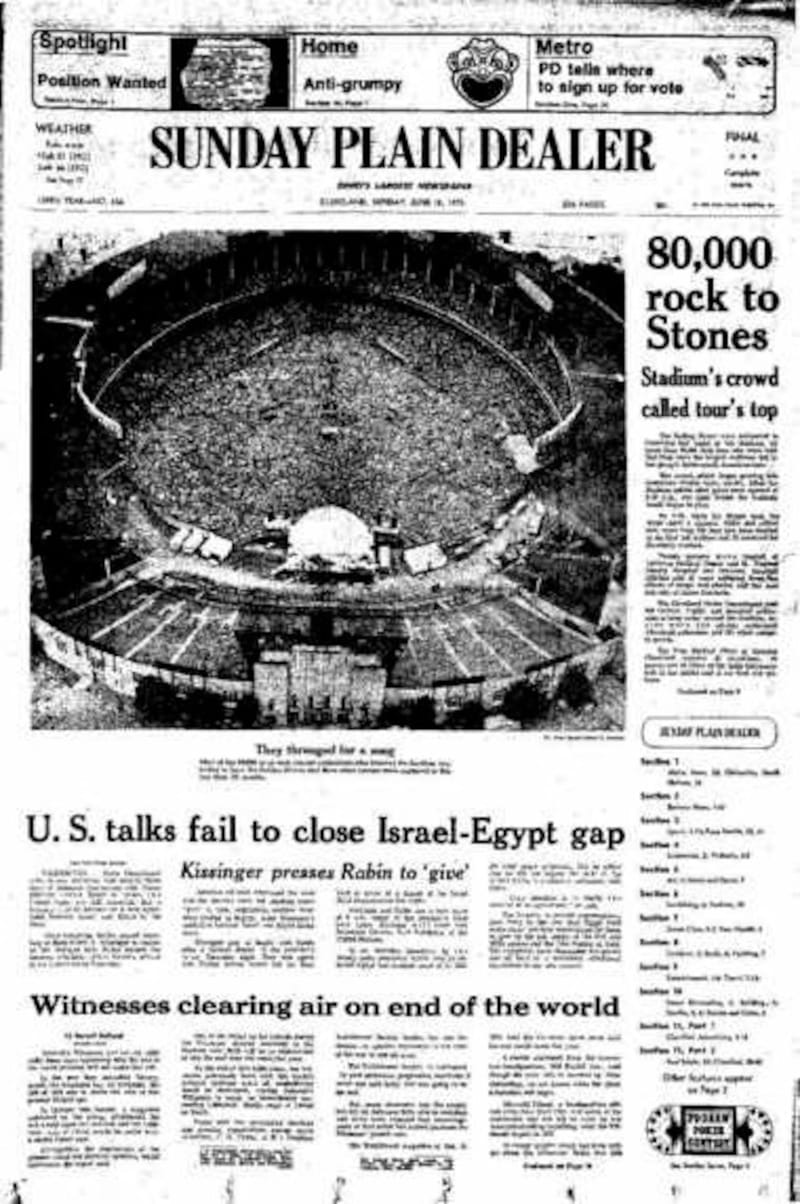
That summer of 1975 in Cleveland, 80,000 people packed Municipal Stadium to hear the Rolling Stones. There was conflict in the Middle East between Israel and its neighbors, and the Jehovah's Witnesses seemed to have predicted the world would end in 1975, though as the year wore on they tried to be a little vague about it.
The Rolling Stones are still – still! – around, Israel and the United States are fighting a war in the middle east that's killing people and destroying economies, the American economy has gotten only more unfair and unequal, and a man touted by some Christians as being sent by God is trying to rule the United States like a B-movie millenarianist.
But we have iPhones. America turned its eyes away from Cleveland, and all the Clevelands, all the Detroits, Youngstowns, Wheelings, seduced by the new whiz-bang technology. The Motorola DynaTAC, the first cellphone, was created in 1973 and the year after punk exploded in 1976, the FCC granted the first license to use them, in the Washington, D.C. area.
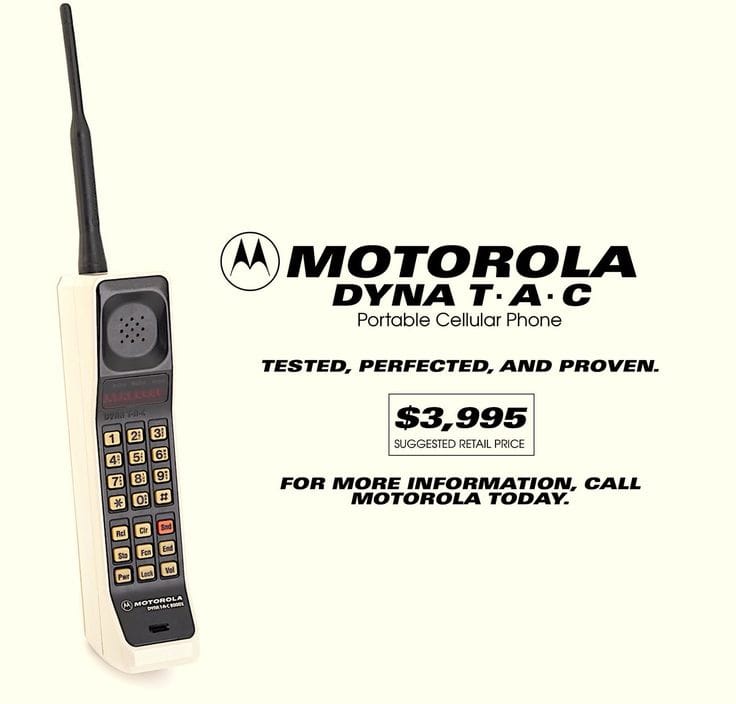
The whole Silicon Valley juggernaut appeared to be a just-in-time salvation, a new industry.
But something really was wrong in 1975, and it wasn't just a bad economy. The punks were trying to tell us something. Later, when I was older, and knew a little more and paid more attention, the Sex Pistols Never Mind the Bullocks (to my mind still the best rock-and-roll album ever recorded), the Ramones, Clash's London Calling, Velvet Underground's Loaded, Lou Reed's Live album and many others, sounded like shouts of warning about a society falling part, not just because unemployment was high, but because we'd been sold a phony bill of goods about what society was supposed to be about, and what citizenship in a nation meant, and who were the good guys and who were the bad guys. The inherent bargain of the consumer paradise had proven vacuous; the social contract no longer existed. The whole facade had rotted and all the silicon in the world would not, and could not, repair it. It would rot even more until the oligarchs questioned the need for society and culture at all.
I got my dull machine
Got my electronic dream
Sonic reducer, ain't no loser
I'm a sonic reducer, ain't no loser (Huh!)
Today, fifty years on, I often find myself wishing we would have listened back then. If we had, we'd have an easier road now.
Comments ()