Local
Smaller places can rot with undiscovered corruption just like big places can, and those smaller places need reporters.
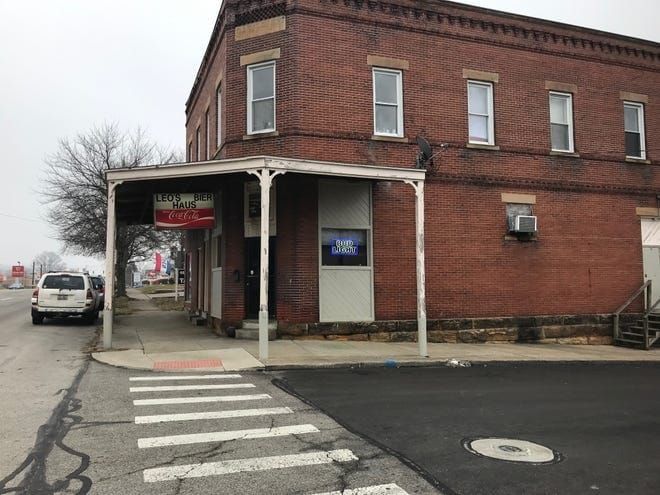
Last week somebody told me that Leo's Bier Haus closed up. At some later date it was turned into a "gastropub" selling sandwiches and hot dogs. This news triggered my nostalgia.
I had my first legal beer inside Leo's. I was eighteen, and at that time you could drink 3.2 (a measure of alcohol percentage) beer in Ohio. This was not my first beer in Leo's, though. I'd been drinking in Leo's for months, maybe more than a year because Leo's almost never checked anybody's I.D. and my friends were a few months older. So, we'd sit at a wooden booth that had not changed since at least the Great Depression and order a bucket of Stroh's. These were not shiny galvanized buckets piled high with shaved ice and bottles of artisanal beer shoved down into the shavings. These were old, rust speckled buckets full of beer out of the tap. We dipped our mugs into the bucket without regard to how much saliva we were leaving behind with each dip.
Before it was Leo's, it was Charlie's. It had been Charlie's for a long time. The name change didn't lead to any changes inside the bar. In fact, when I returned to Lancaster to live while reporting my book, Glass House, Leo's was the first watering hole I entered, and it STILL had not changed. Same wooden booths and benches. Same bar stools. It was a dive. It had always been a dive. I loved it. I ordered a beer. It cost $2. I almost cried.
I was sad to learn that Leo's had been closed, because next month I am returning to Ohio to attend the Fairfield County Fair and meet up with some old friends. (I wrote about the fair, here.). I wanted to go to Leo's and reminisce. I hope the sandwich-and-hot-dog gastropub makes it, though, because a couple of local people are trying to make a go of it, and, like Leo's was, communities like Lancaster need their local spots owned by local people.
Local matters. Here's another local place I love, The Little Lion in San Diego.
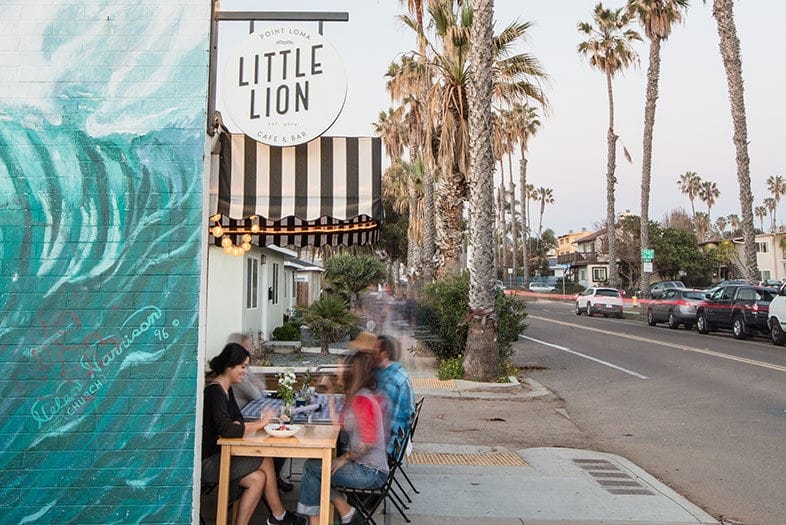
As you can see, it's tiny and right on the street, and while there are a few tables inside, the rest are around the corner, in the alley. Nobody cares that you have to walk through the alley, and then the kitchen, to get to the bathroom. It's not only that the food is delicious, it's that this place is as local as a place can get and unlike any other place you could go for a Sunday brunch or dinner. Recently, the mother of the owners, who writes the restaurant's newsletter, pointed out the allure of "local," and how many customers come back again and again because it's "their" place and that sense of ownership makes people happy.
Our country, and our world, feel so spun out of our control. Corporate consolidation has taken over everywhere, it seems. Lancaster's own hospital, where I was born, has now been bought out by a bigger health system so there won't be local control any more. It's a similar story to the one I told in The Hospital. Your local pharmacist (if one still exists) is being rapidly usurped by CVS. Your doctor may be owned by UnitedHealth, or a private equity firm. TV stations and radio stations now belong to a few owners, often ones with a billionaire's agenda. There are about four hotels in this country. I'm exaggerating, of course, but Hilton, Hyatt, Marriott, IHG, Wyndham, and Choice own almost all the hotel brands in the United States. The same thing happened to rental cars, airlines, restaurants, and lots of other parts of the American economy. The little businesses that make our communities special, even if only to us, are being swallowed up.
This is true of news, too. Local news has always been a keystone of local life, and, without it, "local" loses much of its meaning. If we don't know what's going on in our own towns, how can we understand how we are all connected and how forces from outside our communities affect us? The death of so many local news outlets – at least 213 American counties are considered news deserts – is, I believe, a part of why there is so much fragmentation in the country. We trust each other less and believe the wildest lies because we have no reliable sources of truth and investigation. We become passive observers without power in a giant cyclone of mess.
Even some local news organizations that still exist are shadows of what they once were. I spend a lot of time in libraries searching through old newspapers. It's astonishing how vital so many of them were, and how good so many were at doing the job of journalism by figuring out what was going on and telling people about it.
Smaller places can rot with undiscovered corruption just like big places can, and those smaller places need reporters. The Lancaster Eagle-Gazette, where I once set type, is now part of Gannett, a newspaper conglomerate. Articles are often written by AI now, and the paper runs almost no local enterprise stories. It does run ads disguised as legitimate articles like in today's paper: "Taco Bell is testing a new menu item in Ohio. Here's where to try it." Most people in Lancaster know nothing about the machinations involved in the sale of their hospital. They know almost nothing about what goes on inside the Anchor-Hocking factory, the biggest private employer in town, other than Facebook gossip.
The good news is that a new generation of local journalism outlets has been pushing through the detritus left behind. Many of these are state-level focused, but they do run local stories. And some are rooted in towns and cities. Non-profits, seeing the need, are buying local outlets, as in New Hampshire this month. Rural places still suffer, though. It's hard to pay anybody to be a good reporter in a rural county when you have so little income base through advertising and subscriptions to support them and Big Tech steals the hard work of journalists and news organizations to feed their own greed.
So, in the interest of giving these new, hard-working outlets more oxygen, I am going to start highlighting some of their work, with links, in this newsletter. It'll be a regular feature. But you have a responsibility, too, to read, and subscribe and, if it's a non-profit, to donate. Help them live and contribute to what makes "local" so special.
Here are some from this week:
Pa. Legislature awards millions in no-bid contracts with vague receipts
Advocates call on Clearfield County commissioners to vote ‘no’ on ICE contract extension
New Mexico Supreme Court rejects 2 Project Jupiter challenges, allows permitting process to resume
2,776 acres of Ohio’s Wayne National Forest leased for more than $11 million for fracking2,776 acres of Ohio’s Wayne National Forest leased for more than $11 million for fracking
Summit County is navigating ‘significant headwinds,’ unpredictability, executive says during 2026 address
Arkansas pharmacies file lawsuit accusing PBM of underpaying them for medications
Oklahoma board OKs unpermitted dam. Property owner offers his own solution.
Comments ()