Keith
People will die because of this. And not only will people die, but hospitals are at risk of dying, too, because when people lose this coverage, they go to ERs for care, and then don't pay the hospital because they don't have the money.
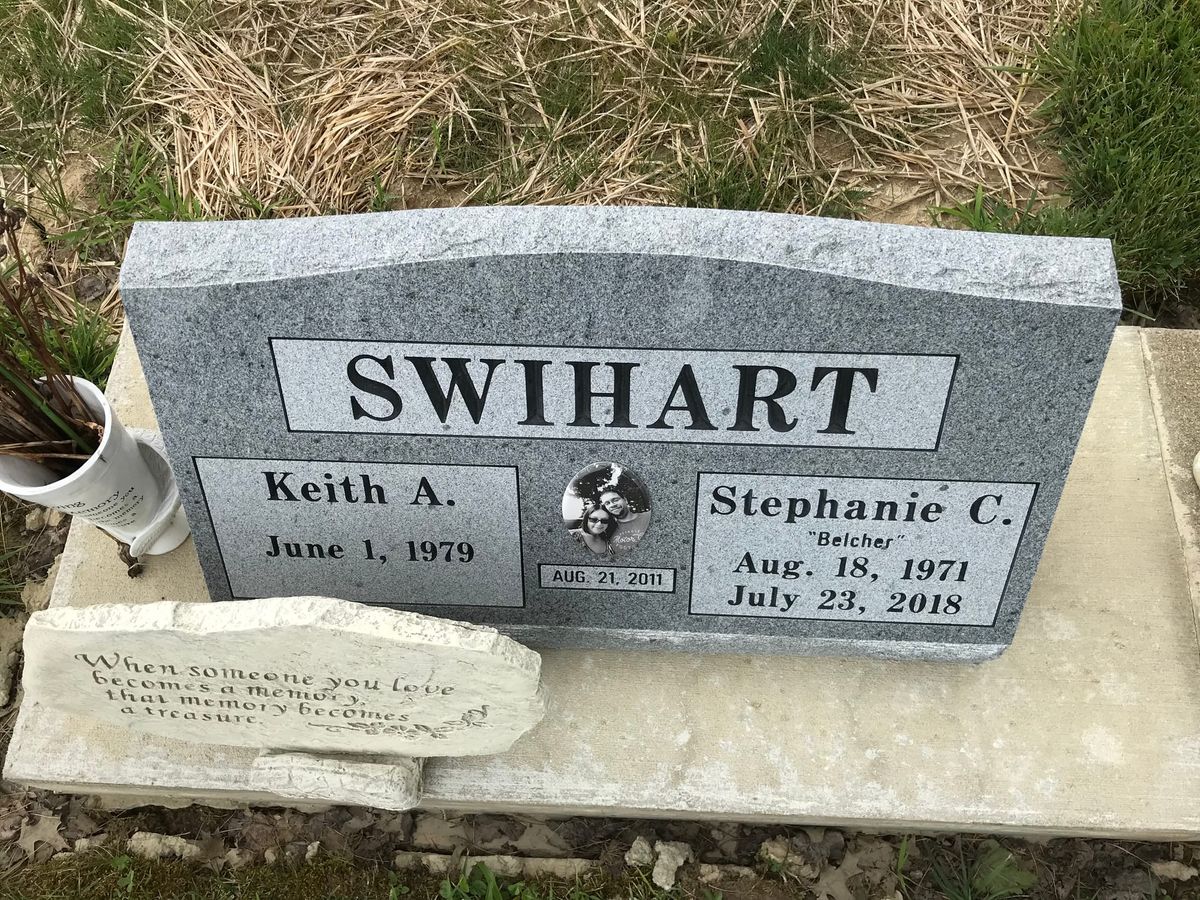
I heard from Keith Swihart this week. Readers of my book The Hospital may remember Keith. He was the diabetes patient whose tortured journey through the American medical system stood in for the path many Americans are forced to walk.
When we first meet Keith, he's about 41. His wife, Stephanie, has just died of cervical cancer. He's struggling to raise his autistic son while working in a Menard's distribution center. He can't afford the company health insurance, just like a lot of his co-workers can't afford the company health insurance. He has diabetes, and is supposed to eat a carefully controlled diet, and inject insulin in specific doses, but he does neither, at least not very well, because the insulin costs a lot, as do the glucose test strips and devices, and Keith doesn't have much time or money to prepare meals optimized for good health.
"I'm feeling great!" Keith told me. Hospital readers will recall that this is what Keith always says. But then, "It's been a rough patch, though."
Keith has been in and out of hospitals this summer, most recently from a staph infection that found its way into his body via a port used for kidney dialysis, or perhaps the fistula that he had repaired earlier this summer. He is now completely blind. He has given up custody of his son to a relative. He spends a good part of his life hooked up to dialysis machines. He can't walk much. He hasn't worked for years. He is 47 years old.
I have lost track of how many medical procedures Keith has had. I started counting when his big toe was amputated after it turned gangrenous, a procedure that was followed by the amputation of most of his foot. I have also lost track of how much Keith's care has cost the American taxpayer via Medicaid. It has to be well over $1 million, and if you forced me to guess I'd estimate a multiple of that.
That Keith's call to me arrived this week was coincidence, but it made for interesting timing. It is well established that health outcomes have as much, or even more, to do with what are known as "social determinants of health" as they do with direct medical interventions like drugs and doctors. The American Medical Association now (finally) teaches this. Keith grew up on the poor side of working class in a family plagued by obesity and without good access to healthy food. He is not well educated. He has never had much money as an adult, and when he fainted while working on an assembly line at an auto parts maker, and was diagnosed with diabetes, he found the insulin to be expensive, so he rationed it, often taking less than prescribed, and not testing himself as often as advised. The effects cascaded over years.
Well, this week, the MAGA director of the National Institutes of Health, Jay Bhattacharya, announced that he was pulling the plug on two ongoing studies designed to explore connections between social determinants of health and mental well-being, including Alzheimer's. He killed them even though both were well along.
Meanwhile, also this week, the Indiana Capital Chronicle reported that 343,000 people in that state were dropped from Medicaid rolls, just as people are being dropped from the rolls in many other states. Some left because they found jobs, or received raises, or experienced some other change that left them ineligible for the aid, but most were dropped after new Trumpist eligibility requirements were adopted by Indiana.
People will die because of this. And not only will people die, but hospitals are at risk of dying, too, because when people lose this coverage, they go to ERs for care, and then don't pay the hospital because they don't have the money. All these are reasons why the United States spends far more on medical care than any of our peer nations and gets worse outcomes than any of our peer nations.
Finally this week, a friend of mine has been helping a relative who's being treated for brain cancer. Both my friend and the relative are sophisticated, educated, somewhat well-off. After receiving some good news about the results of a diagnostic surgery, the relative suddenly felt ill after returning home. An early morning trip to an ER resulted in a diagnosis of meningitis, an infection of the lining around the brain, likely acquired in the hospital.
Navigating the infection, the hospital, the IV treatment, the nursing, the chaos of differing information, online portals, paperwork, left my friend near tears. It was all she could do to not blow up at the next strange face to appear in her relative's room to give some confusing, and sometimes conflicting, piece of information or be directed to a maze of online emails and files. Then she had to assume the role of nurse to administer the IV drugs once her relative was released, which is not a trivial matter.
Having read The Hospital, she said "Can you imagine Keith trying to deal with this?"
I can because I was with Keith while he tried, and usually failed, to navigate American healthcare.
Nobody likes American healthcare, except, maybe, the very rich and big insurance companies. Doctors don't like it. Most hospital administrators don't like it (every single hospital CEO who spoke to me after the publication of the book – and I mean every one – said "It was like you were writing about my hospital.") American healthcare is broken. It is a national failure and a national shame.
Imagine if we had given Keith his insulin when he was first diagnosed and provided good coaching on using it, on how to improve his diet, on preserving his overall health. This would have cost taxpayers money, of course. But it would have been a lot less than the amount we have paid for Keith's care since and, in the meantime, Keith would be a taxpayer himself. However much Bhattacharya thinks he's saving by killing research, we will all pay more down the road.
I encourage you to think about this when you enter a ballot box.
Comments ()