Anti-Pundit Punditry
None of the best moments of American history – from Lexington's green, to Gettysburg, to the beaches of Normandy, to Selma – were about inflation, or the price of gas. They were about standing up for a set of ideals.
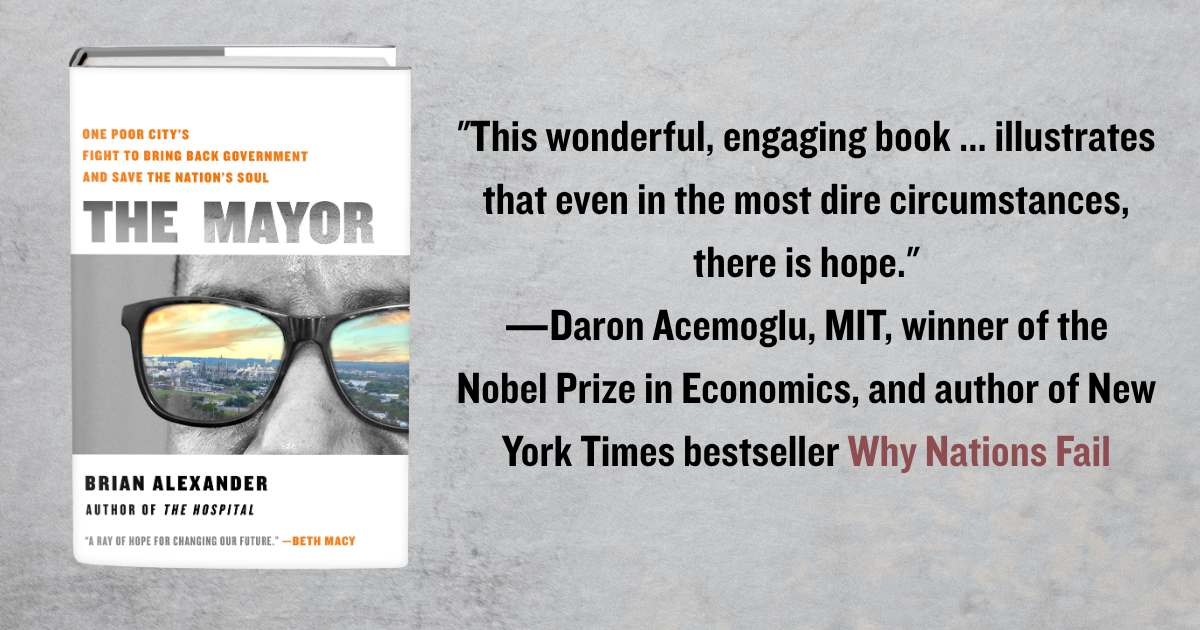
I am not a fan of the pundit-opinionista food chain. I think there is far too much take-having and far too little reporting. But reporting is expensive – believe me, I know! – and take having is cheap. So TV air time and cable time, and column inches cost a lot less to fill with punditry.
(By the way, I make almost all these little posts free to read, but if you subscribe at the low, low price of $5 it does help defray the cost of the site and I do hope to use the dough to help defray some of my reporting costs, too. Besides, you get to use the comments to tell me all the ways I'm wrong.)
Anyway, having dissed punditry I am going to do just a little bit here because I keep seeing things through in the post-election haze of opinion that bother me and I'd hate for the people who read this thing to miss what I think is an important point.
I don't think the Democratic victories had much at all to do with the Democratic party as a party, as a legion of true believers. I don't think most Americans love the Democratic party, and we now know that most Americans sure don't love the Republican party. I don't think most Americans care one way or another about the two big political parties.
And I don't think "affordability" was the main reason why the American voter shifted so much since 2024.
I do reporting. I go out into the world, to cities and towns most reporters don't spend a lot of time in, and I do spend a lot of time there talking to a lot of people over the course of months, and then years. I have met very few people in these places who are die-hard political partisans. Not these days. These days, people talk about the economy, yes, and they do talk about affordability, yes, but more often they talk about a sense of loss.
When I was back in Lancaster, Ohio, my hometown and the setting for my book Glass House, to make an appearance for Amy Acton, who won her race for governor of Ohio (four days later and I still can't stop smiling), a woman stood to to say she was running for a state rep seat having never held political office before and never campaigned before. She'd been a glass worker in the factory, and single mother, and she was running as a Democrat, but only because the Democrats weren't the Republicans and she had to run as something. Really, she was running to overcome her deep sense that a giant system she was only beginning to understand had gone awry.
She was running as an opponent of The System more than as a Democrat. The System was Wall Street, and data centers, and Silicon Valley, and inequality, Americans getting shot down in the streets, and the erosion of the sweet little things that made life in a smaller place like Lancaster seem so pleasant for so many for so long and now did not, as much. The hospital in which she was born (and in which I was born, the one in which most everybody in town was born) was just taken over by a big health system and she knew prices would go up and the local feel of the place would go down.
Her state had become a cesspool of corruption.
Big forces that felt mysterious were crushing the life out of the best parts of America and she wanted something done about that, and so she was running for office.
Here in California, in the Imperial Valley, the desert landscape that became one of America's fruit and vegetable supermarkets thanks to the Colorado River, residents who never knew each other, who'd never been politically active in their lives, found themselves attending angry meetings and then forming committees to fight a data center being proposed for their backyards. The server farm would use huge amounts of water and huge amounts of electricity, and the whole thing was presented to them as inevitable.
“Everything that we’ve done to this house, I’ve done it myself,” a man named Francisco Leal told a reporter. “You know, like the patio, the tile floor, I did it myself. The kitchen – we redid the kitchen – I did it myself." The giant center would sit hard against his back fence.
Now it won't. The deal to build it is all but dead because people who didn't think they had much voice, or choice, discovered that, maybe, they did.
“I think that this data center, as hard as it has been for many of us to do this work on our own time and dime, has given us the opportunity to truly come together across political party lines to defend Imperial Valley,” said Gilberto Manzanarez, the founder of Valle Imperial Resiste.
This election, in my view, was about democracy much more than affordability, and that heartens me. If the fate of this country, and all the things we like to think it stands for, can really be sold for a percentage point or two of lower inflation, then we have lost the thread of our own narrative. None of the best moments of American history – from Lexington's green, to Gettysburg, to the beaches of Normandy, to Selma – were about inflation, or the price of gas. They were about standing up for a set of ideals.
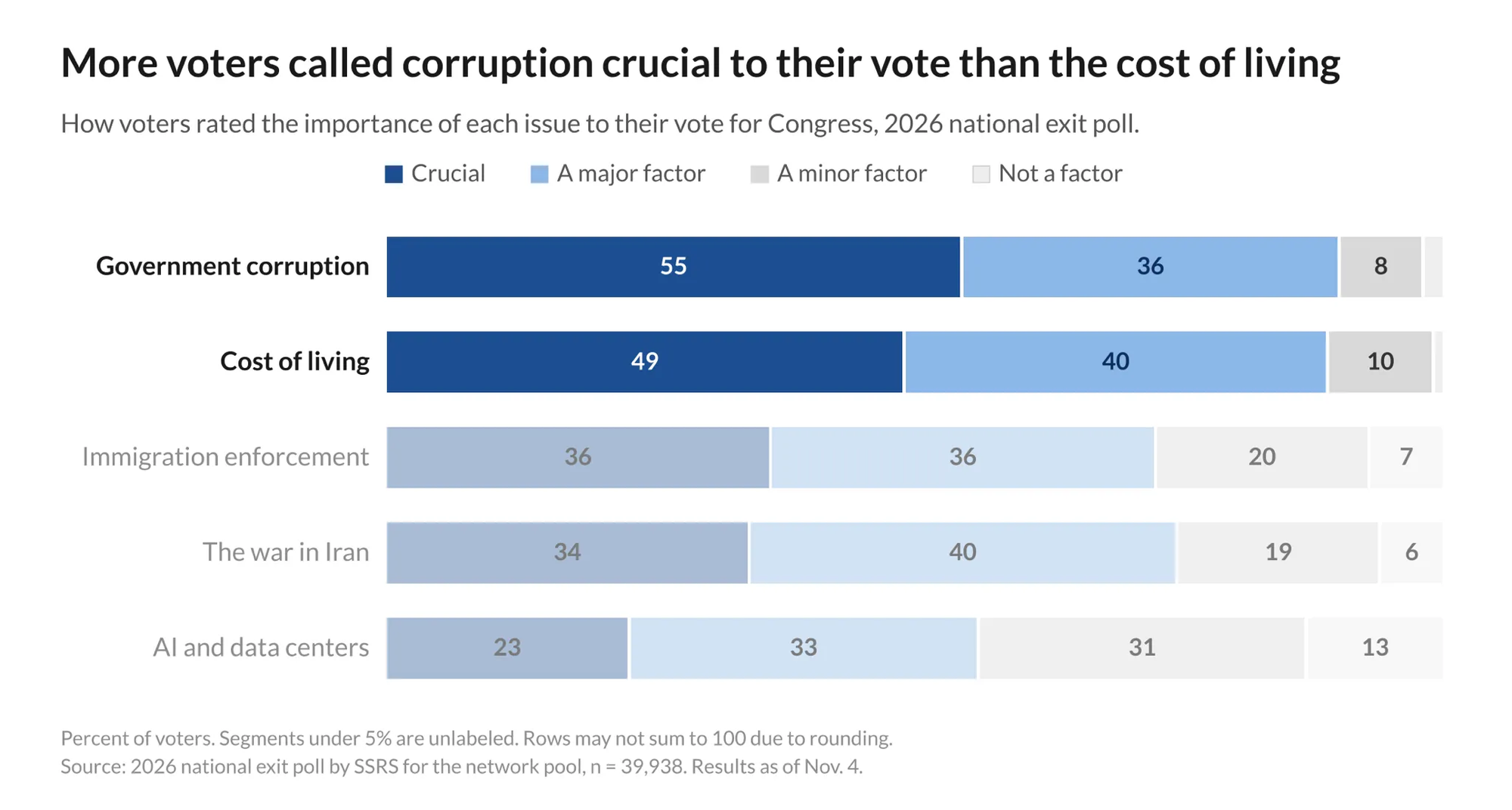
I saw a couple of charts that make me think I'm right about this. I know that, in Ohio, corruption from Trump to the shenanigans of state pols and business interests, especially a huge utility bribery scandal, played a major role in Acton's victory. And, in fact, she did not stress the fact she was running as a Democrat. She stressed that she was the steely girl from Youngstown who overcome hardship and wanted every Ohioan to be seen and heard in ways they were not being seen, nor heard.
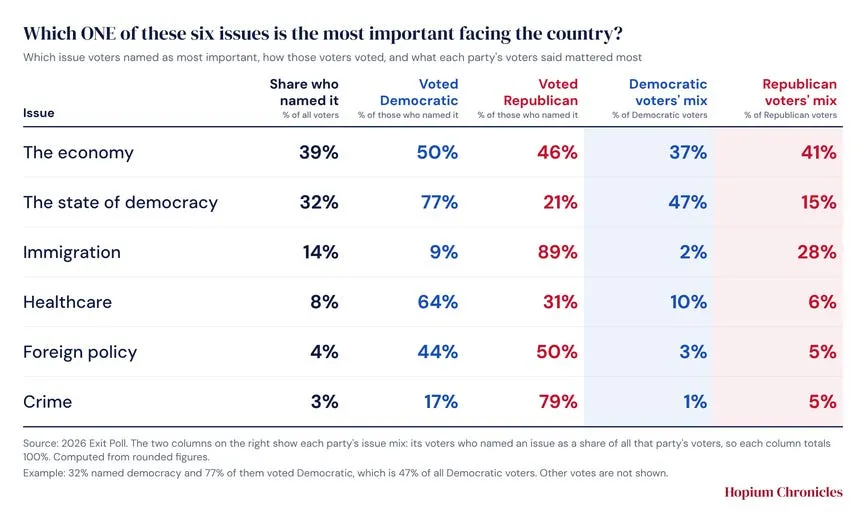
Americans value their democracy, and they want it back. Of course, they want the economy to work, and the cost of living to go down, and to be able to afford a house. But we're not ready to sell the American idea just yet, not even for cheaper gas.
There's revolution in that, and Democrats had better pay attention to it because if they fail to harness that energy to reform government and make it work for all Americans, the revolution will eat them alive.
P.S. Some people have asked, so... the candidate for state legislature from Lancaster was Whitney Wood. She did not win, but she made it a tight race in a gerrymandered area that is heavily Republican. In so doing, she made change. Here's her website. I suspect she's not done.
Here are some good stories from around the country from local outlets.
Comments ()